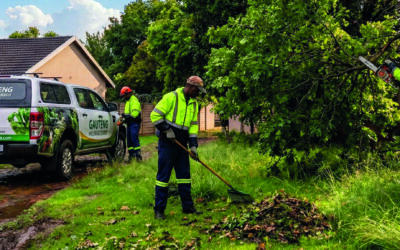
By the time spring arrives in Gauteng, our homes are carrying a season’s worth of dust, fallen leaves, tired gardens and small problems hoping we won’t notice.
There is a particular morning in Gauteng when you realise winter is beginning to loosen its grip. The sun feels a little less shy, the afternoon lasts a little longer… and someone in the neighbourhood starts a lawn mower with the confidence of a man announcing a new era.
You open the curtains, take a proper look outside and think, “Good grief, when did the house get so dusty?”
Winter does not leave quietly. It leaves behind a thin beige coat on the driveway, leaves gathered in every corner, gutters full of crunchy evidence, and a garden that looks as though it has been through a very difficult board meeting. Your patio furniture has lost its sparkle. The outdoor walls appear a shade duller. Even the braai seems to be waiting for someone to remember it has a purpose beyond holding an empty pot plant.
None of this means your home has been neglected. It simply means it has lived through another Highveld winter. Dry air, wind, dust, cold nights and months with little to no rain all leave their calling cards. We have become used to the changes because they arrive slowly. Then spring sunlight turns up and, rather rudely, points out everything.

THE FIRST CLUE IS USUALLY THE COLOUR
A driveway does not wake up one morning and decide to become brown. It happens one gust of dust at a time. The same goes for paving, boundary walls, awnings, windowsills and those mysterious ledges that collect dirt even though nobody remembers approving their appointment as dust shelves.
After a dry winter, outdoor surfaces often look older than they are. The dirt settles into textured paint, paving loses its contrast and the entrance to the home starts looking tired. It is amazing what a careful wash can reveal. Sometimes the original colour of the paving returns like an archaeological discovery: “Oh, so it was grey!”
The important word is careful. Not every surface wants to meet a pressure washer at full enthusiasm. Hard paving may handle pressure cleaning, while painted walls, awnings, roof coverings and delicate finishes may need a gentler method. The goal is to remove winter, not the paint.
GUTTERS: WHERE AUTUMN GOES TO RETIRE
Then there are the gutters. From ground level they can look perfectly innocent, which is exactly how gutters get away with things.
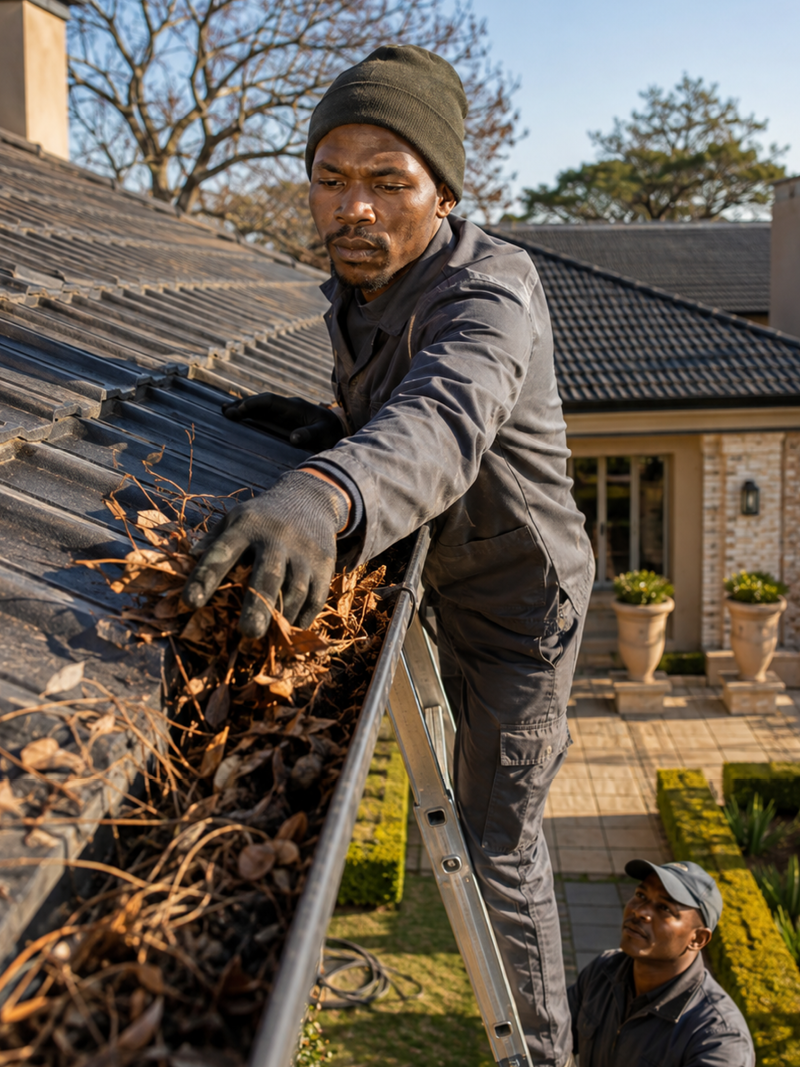
Inside may be a thriving collection of leaves, twigs, seed pods, bird debris and a plastic packet that has travelled farther than most of us did this winter. Roof valleys and downpipes can collect the same material… Everything stays dry and well behaved until the first serious summer downpour arrives. Then water looks for another route, usually towards a fascia board, a wall or the one place you have just repaired indoors.
Clearing gutters before the rains is not glamorous work, but neither is placing buckets around the lounge at two in the morning. A simple clean and flow check can help water go where it was always meant to go: away from the house.

THE GARDEN IS NOT DEAD. IT IS WAITING.
Gauteng’s gardens can look a little tragic by August. Lawns are pale, flower beds are untidy and bare branches make the whole property seem exposed. There is always one or two shrubs that look completely finished, only to return in October as if nothing happened.
This is the hopeful part of what winter leaves behind. Under the brown grass and dry soil, much of the garden is simply resting. Spring preparation is less about bullying everything into instant greenness and more about giving it the best chance to wake up well.
Fallen leaves can be cleared, beds tidied, edges restored and dead growth removed. Soil may need compost, feeding, aeration or mulch. Irrigation should be checked before it is desperately needed. Light shaping can improve the garden, but not every plant wants the same haircut. Heavy pruning at the wrong time can remove new growth or flowers before they have had a chance to appear.
And that large branch hanging over the roof like a passive-aggressive relative? That deserves proper attention. Tall trees, heavy limbs and anything close to power lines, roofs or electric fencing should be assessed by a specialist. There is a difference between pruning a hedge and starting an unscheduled forestry operation on a Saturday morning.
LOOK UP BEFORE THE RAIN COMES DOWN
Roofs are easy to ignore because they are mostly out of sight and, if all is going well, out of mind. Winter, however, can leave loose tiles, weathered sealant, tired waterproofing, rust spots and small cracks. These may sit quietly during the dry months, practising their innocence.
The first summer storm is a very efficient inspector. Unfortunately, it tends to deliver its report through the ceiling.
A pre-rain roof inspection can identify obvious trouble before water becomes involved. Look for cracked or displaced tiles, lifting roof sheets, damaged flashing, blocked valleys, peeling coatings and stains on ceilings or exterior walls. Small problems are often simpler to manage while they are still small.
Roof work also comes with real safety risks. Double-storey homes, steep pitches and fragile roof coverings are not the place for optimism, a borrowed ladder and a pair of old takkies. When access is difficult, bring in someone equipped to work at height safely.
EVEN THE SOLAR PANELS HAVE BEEN COLLECTING WINTER
Solar panels spend the season facing the sky, which means they also face dust, pollution, pollen, leaves and the occasional contribution from a bird with excellent timing.
When dust and grime coat the glass, less clear sunlight reaches the panel. Before the brighter months arrive, accessible panels can be inspected and cleaned using panel-safe methods. This is not a job for harsh chemicals, abrasive brushes or a pressure washer aimed upward with heroic confidence. The panels, wiring and roof all need to be treated with care.
It is also worth checking whether branches are beginning to cast shade over the array. A tree may have been bare all winter, then quietly block the afternoon sun once its leaves return. The tree is not being difficult. It is simply doing tree things.
THE SMALL THINGS WE STOP SEEING
Every home has a list of small exterior jobs that somehow becomes part of the scenery. The gate catches slightly. A tap drips. One outside light stopped working in June. Paint is peeling near a windowsill. A section of sealant has cracked. The patio door needs persuasion. The garden bench has developed the complexion of an old ship.
We walk past these things so often that our brains remove them from the picture. Then visitors arrive for the first spring braai and suddenly we see the property through fresh eyes. This usually happens ten minutes before the doorbell rings.
Spring is a sensible time to deal with the little jobs together. A handyman can patch, fill, adjust and seal. An electrician can inspect faulty outdoor lights, plugs or wiring. Rust on gates and railings can be treated before it spreads. Touch-up painting can freshen worn areas without painting the entire house when the rest of the finish is still sound.
This is not about chasing perfection. A home is allowed to look lived in. The aim is to catch what winter has exposed, protect what matters and make the property feel cared for again.
TAKE A SLOW WALK AROUND YOUR HOME
Before you make a grand list or start pricing a complete renovation, make a cup of tea and take a slow walk around the property. Start at the gate and pretend, for twenty minutes, that you are seeing the place for the first time.
Look down at the paving and drains. Look across at the walls, windows and awnings. Look up at the gutters, roofline, trees and solar panels… Open the outside taps, switch on the garden lights and walk through the entertainment area. Check where leaves have gathered and where water would travel during a heavy storm.
Take photographs as you go. Separate the list into three simple groups: what needs cleaning, what needs repairing and what needs a specialist. You may discover that the property does not need a massive makeover at all. It may just need a thoughtful reset.
A HOME WAKES UP WITH ITS PEOPLE
The loveliest thing about preparing a home for spring is not the clean driveway or the neatly clipped hedge, although both are deeply satisfying. It is what comes afterwards.
Doors stay open a little longer. Children and dogs wander outside again. The first shoots appear in the garden. Someone wipes down the braai grid. Chairs are pulled into the sun. Friends visit. Supper moves onto the patio and, for a while… nobody is in a hurry to go indoors.
Our homes hold the ordinary moments that become the memories we keep. The Sunday lunches, muddy paws, birthday tables, quiet cups of coffee and conversations that stretch into the evening all need somewhere to happen. Caring for a property is partly about protecting an investment, but it is also about preparing the stage for another season of life.
Winter always leaves something behind. Dust, leaves, a few repairs and perhaps a garden looking worse for wear. But it also leaves us with the pleasure of watching everything return.
And that is the promise of spring: the house does not need to become perfect. It only needs a little care, a little sunlight and people ready to enjoy it again.